Moisture risk
Ventilation planning can reduce moisture risk when paired with appropriate detailing and insulation conditions.

Attic ventilation and airflow planning to support moisture and temperature management—based on roof structure and constraints.
Service availability depends on ZIP code and schedule. Options depend on roof type and attic configuration.
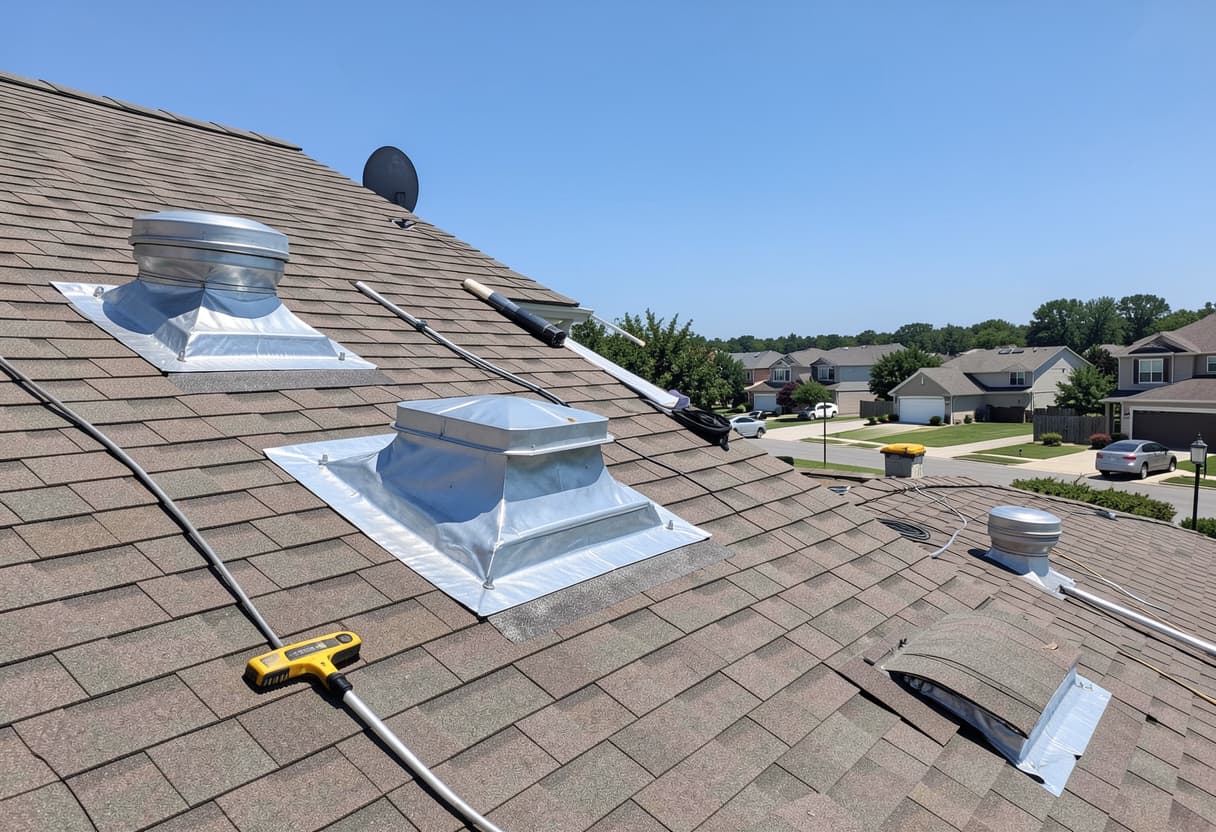
Ventilation planning can reduce moisture risk when paired with appropriate detailing and insulation conditions.
Intake and exhaust options are reviewed together to support balanced airflow.
Options depend on roof type, existing vents, and installation constraints.
The exact scope depends on attic configuration, insulation, and existing vent paths.
Ventilation is one part of system performance. We may recommend addressing detailing, insulation, or moisture sources if observed.
Condensation risk, musty odors, or staining observations.
Hot attic conditions and comfort issues.
Aligning ventilation with replacement planning.
No. Options depend on roof type, existing vents, and the attic configuration.
It can help, but moisture sources also matter. We note likely contributing factors when observed.
Sometimes, depending on roof type and access. We outline options and constraints.
By roof type, access, product selection, and the complexity of intake/exhaust changes.
Share your ZIP code and any symptoms—then we’ll outline ventilation options and next steps.